Amazon OneLink solves a narrow problem well. A reader in another country clicks your link to a product on Amazon.com, lands on the US store, and leaves, because shipping is slow, prices are in dollars, or they simply shop on their own country’s site. The click was real; the commission never happened.
OneLink redirects that visitor to the equivalent page on their local Amazon store and credits the sale to your Associates account for that country. Below is how it works, what the setup needs, which countries it covers, and the limits worth knowing before you count on it. If you are not yet an Associate, start with the Amazon Associates requirements.
How does Amazon OneLink work?
Amazon’s Associates Central help page on OneLink puts it plainly: “OneLink is currently available for US Associates and can redirect international shoppers to the Amazon websites.” The starting point is a US account. The redirect happens when a visitor from a supported country clicks one of your Amazon links.

What the visitor sees depends on matching. By default OneLink uses “close match”: if the local store carries the exact product or a similar one, the shopper goes to that product’s page there. If it does not, the shopper goes to search results on the local store instead. So a niche product sold only in the US will send a UK reader to a search page, not a dead end, but also not a product page.
The useful part is that you do not rewrite anything. Amazon says no link changes are needed “as long as you have completed the one-time setup and use Amazon full links or Amazon short links on your site”. Existing content keeps working.
How to set up Amazon OneLink
The setup has more steps than the redirect suggests, because each destination store is a separate programme. You need an Associates account in every destination country you want to earn from, and a default tracking ID for each. Earnings accrue in that country’s Associates account, not in your US account, so each one is paid and reported separately.
- Hold an approved US Associates account.
- Join the Associates programme in each destination country you want to cover.
- Open the OneLink page in your US account and link each destination account.
- Choose a default tracking ID for every linked country.
- Keep using Amazon full links or Amazon short links on your site.
The table below summarises what Amazon states about each part of the process.
| Question | What Amazon states |
|---|---|
| Who can use it | “currently available for US Associates” |
| Accounts needed | An Associates account in each destination country |
| Tracking | A default tracking ID for each country |
| Where earnings go | That country’s Associates account |
| Default matching | “Close match”: exact or similar product, otherwise local search results |
| Link changes | None, after the one-time setup, with full or short Amazon links |
| Nearby countries | Visitors may be sent to their nearest Amazon store |
The separate accounts are the real cost. Each programme has its own terms, commission rates and payment arrangements, and each needs its own application. Before you sign up for every store, check what the commission looks like in each; our guide to Amazon Associates commission rates covers how the US rates are structured, and other stores set their own.
Amazon OneLink countries: the lists disagree
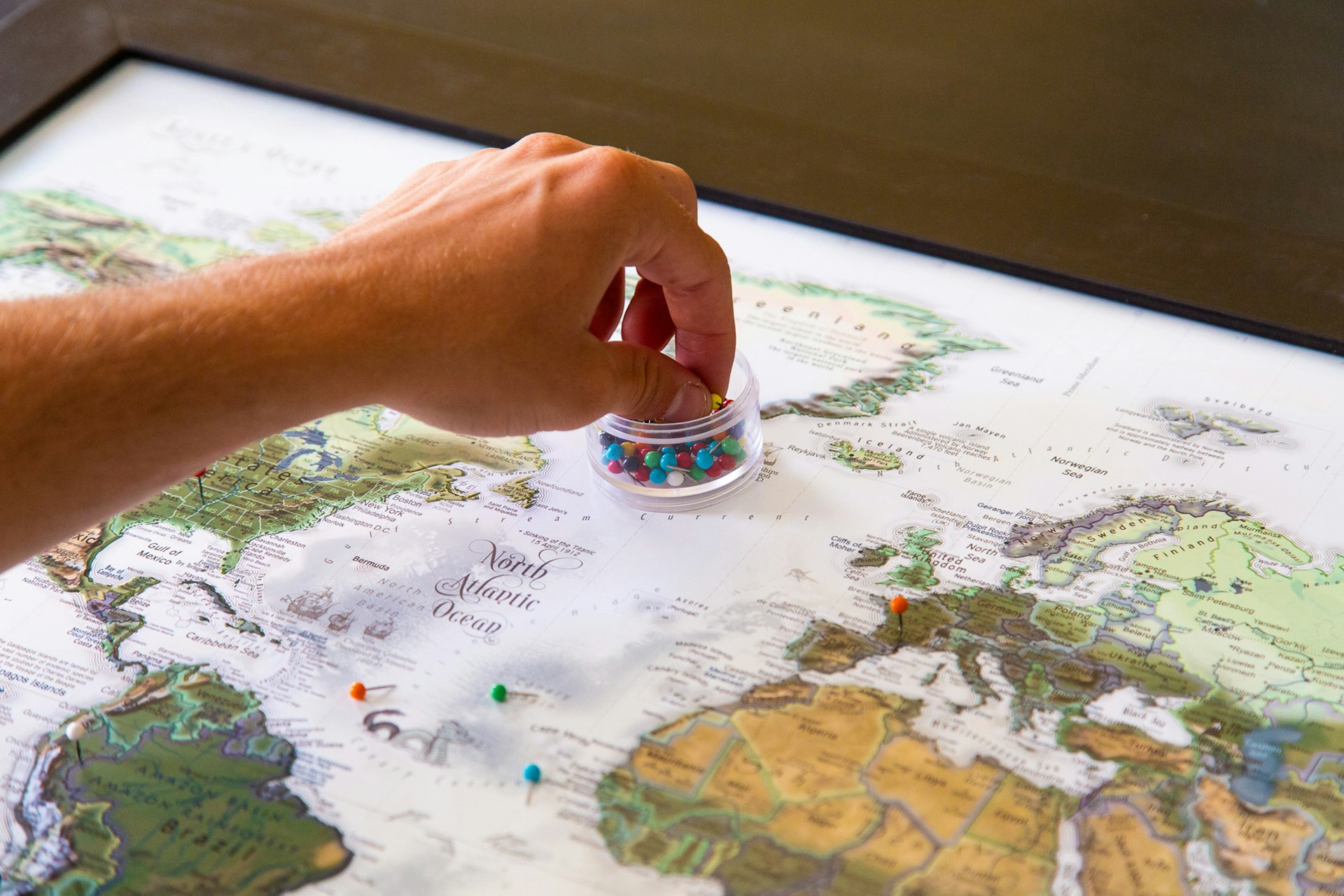
This is the part to check yourself. Amazon’s own pages do not give the same list of supported countries. At the time of writing (October 2026), the Associates Central help page names Japan, Singapore, the Netherlands, Saudi Arabia, Poland, Sweden and Australia, while Amazon’s resource centre lists others, such as Canada, the UK and Germany.

Whatever the reason for the mismatch, the consequence is the same. Do not plan around a list from a blog post, including this one. Open the OneLink page inside your own Associates account; it shows which stores you can link at that moment, and that is the list that counts.
Amazon also notes that visitors from countries near supported ones may be sent to their nearest Amazon store. A reader in a country without its own Amazon site may still be redirected somewhere useful, though whether that visitor actually buys is another matter.
What OneLink does not do
It helps to be precise about the edges, because OneLink is often described as more than it is. It does not pool your money. Each country’s commissions accrue in that country’s Associates account, so a sale in Australia is reported and paid by the Australian programme, not added to your US balance. You will be watching several sets of reports, not one.
It does not help non-US Associates. Amazon describes OneLink as available for US Associates; if your main account is elsewhere, this particular redirect is not the tool for you. It does not cover countries you have not linked: without an account and a default tracking ID for a store, there is nowhere for that visitor’s sale to be credited. And it depends on the link format. Amazon’s promise of no link changes applies when you use Amazon full links or Amazon short links, so links that have been rewritten or wrapped in ways that hide the Amazon URL are worth testing by hand from a supported country, or with a VPN, before you assume the redirect is working.
Is it worth setting up?
For most US-focused sites with a meaningful share of overseas readers, yes. Clicks that would otherwise bounce off the wrong store at least get a chance to convert. The work is administrative rather than technical: several account applications, several sets of programme terms, and several dashboards to watch.
Two practical points. First, OneLink relies on Amazon’s own link formats, so if you route Amazon links through a redirect plugin, test that the redirect still works after cloaking; our guide to affiliate link cloaking explains where that can go wrong with Amazon. Second, every country’s programme expects proper disclosure, so your affiliate disclosure should cover international readers too.
One limitation to be clear about. Your analytics can show how many clicks come from abroad, but nothing tells you in advance how many of those visitors will buy on their local store. “Close match” can send a reader to a similar product rather than the one you recommended, or to a search page when there is no match, and a search page converts worse than a product page. Some of the products you write about may not be stocked in a given country at all. Treat OneLink as a way to stop losing international clicks outright, not as a promise of matching US conversion rates abroad. Set it up, give it a few months, then compare earnings in each country’s account against the effort of maintaining that account. If a store produces nothing, it is reasonable to leave it unlinked and let those readers land on the US store as before.
Frequently asked questions
Who can use Amazon OneLink?
Amazon says OneLink “is currently available for US Associates”. You also need an Associates account and a default tracking ID in each destination country.
Do I need to change my existing Amazon links?
No, provided you have completed the one-time setup and use Amazon full links or Amazon short links on your site.
Which countries does OneLink support?
Amazon’s own pages give different lists. Check the OneLink page in your Associates account, which shows the stores you can link today.
What happens if the product is not sold locally?
With the default close match, the shopper goes to a similar product if one exists, otherwise to search results on the local store.
The takeaway OneLink turns lost international clicks into local-store visits for US Associates, but each country needs its own account and tracking ID, and the country list is the one in your account, not the one on a help page.