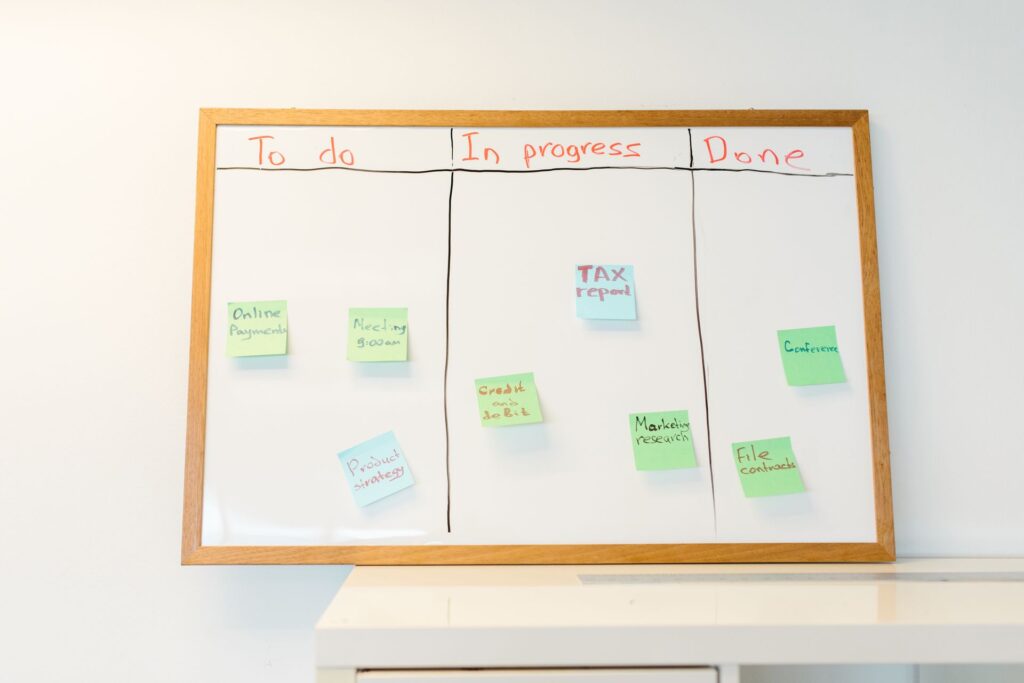
An SEO roadmap is the bridge between knowing what is wrong with a site and getting it fixed in a sensible order. Audits produce long lists. Strategy documents produce goals. The roadmap decides what happens first, who does it, and when it should be finished.
Without one, SEO work drifts towards whatever was raised most recently or shouted about most loudly. With one, you can explain why the team is working on this task and not that one, which matters as much to stakeholders as it does to the work.
What an SEO roadmap is
Ahrefs defines it this way: “An SEO roadmap is a strategic plan of action used to formalize and track key tasks within an SEO campaign.” In their guidance, a roadmap typically covers 6 to 12 months and is created within the first three months of a campaign.

That timing is deliberate. In the first months you are gathering the information a roadmap depends on: audits, keyword research, competitor review, an understanding of what the business needs from search. A roadmap written on day one is a guess. One written after that groundwork is a plan.
Seven steps to build a roadmap for SEO
Ahrefs sets out seven steps. Here they are, with what each one involves in practice.
1. Have your key SEO insights ready
Start from evidence, not ideas. A technical audit, content gaps, ranking and traffic data, and the business goals all feed in. Our SEO audit checklist is a good place to gather the technical side.
2. List the key tasks or workstreams
Turn findings into tasks. Group them into workstreams such as technical fixes, content, internal linking and off-site work, so the roadmap stays readable.
Write each task so that someone could tell when it is finished. “Improve internal linking” never ends; “link the twelve priority guides from their category pages” does. Vague tasks are the main reason roadmaps stall, because nobody can mark them done and nobody wants to start them.

3. Review and refine
Cut duplicates, merge overlapping tasks, and remove anything that does not tie back to a goal. A shorter list is easier to deliver and easier to defend.
4. Prioritise logically
Rank tasks by the impact you expect against the effort they need. The next section covers a simple way to do this.
5. Assign time and resource
Give each task an owner and an estimate. A task with no owner is not on the roadmap, whatever the document says.
6. Format it Gantt-style
Lay tasks out on a timeline so dependencies and overlaps are visible. Anyone glancing at it should see what is happening this month and what comes next.
7. Regularly revise and update
The roadmap is a working document. Revisit it on a fixed schedule and adjust it as tasks finish, slip or turn out to matter less than expected.
A monthly check suits most teams: what finished, what slipped and why, and whether anything new from recent data should displace a planned task. A fuller review each quarter is the time to question the workstreams themselves. Keep a short change log on the document, so that when a stakeholder asks why a task moved, the answer is already written down rather than reconstructed from memory.

Prioritising with an Action Priority Matrix
Ahrefs recommends sorting tasks with an Action Priority Matrix, which places each task by its expected impact and the effort it needs.
| Quadrant | Impact | Effort | What to do with it |
|---|---|---|---|
| Quick wins | High | Low | Schedule first |
| Long-term projects | High | High | Plan, resource and phase them |
| Backlog | Low | Low | Fit in when there is spare capacity |
| “Not going to happen” | Low | High | Drop them, and say so |
The last quadrant is the useful one. Every audit produces tasks that are technically correct and not worth the effort. Naming them as “not going to happen” stops them resurfacing in every meeting and frees attention for the work that matters.
Impact estimates are judgement calls, and some will be wrong. That is fine. The matrix is not meant to be precise; it is meant to make the reasoning visible so it can be challenged.
Quick wins deserve a warning of their own. They are scheduled first because they are cheap, but a roadmap made only of quick wins never tackles the structural problems that hold a site back. Make sure at least one long-term project is moving from the start, even if slowly.

Keep the roadmap to SEO work
Ahrefs advises keeping the roadmap to “tasks carried out by the SEO team only”. Developer tasks belong in the development team’s tracker, and writer tasks in the content calendar. The SEO roadmap can reference them, but should not try to manage them.
This sounds like a formatting choice, but it is about accountability. A roadmap that lists other teams’ work makes the SEO team look responsible for deadlines it does not control. When a developer ticket slips, it should slip in the developers’ system, where the people who can fix it will see it.

In practice, the SEO roadmap says “write the brief for the category page rewrite” and “review the shipped template”, while the build itself lives elsewhere. Our technical SEO checklist is useful for writing tickets other teams can act on, and our guide to SEO content strategy covers how content plans connect to the roadmap.
An SEO roadmap example, and how to keep it honest
A simple SEO roadmap example for a six-month plan might run: month one, quick-win technical fixes from the audit; months two and three, internal linking and updating existing pages; months three to six, new content for priority topics, with a long-term site structure project running alongside. Each line has an owner, a target date and the goal it supports.

Tie each workstream to a measure you will report on. Our guides to SEO KPIs and SEO reporting cover which measures are worth tracking. When a review shows a workstream is not moving its measure, that is the signal to revise the roadmap, not to defend it.
One limitation is worth stating plainly. A roadmap organises work; it does not make the estimates in it correct. Search results change, priorities shift and some tasks take far longer than planned. Treat the dates as commitments to review, not guarantees of outcome, and expect the second quarter of a roadmap to look different from the first.
Frequently asked questions
What is an SEO roadmap?
Ahrefs defines it as “a strategic plan of action used to formalize and track key tasks within an SEO campaign”, typically covering 6 to 12 months.
When should I create an SEO roadmap?
Ahrefs suggests within the first three months of a campaign, once audits and research have given you the insights to plan from.
How do I prioritise SEO tasks?
Use an Action Priority Matrix: quick wins first, long-term projects planned and resourced, backlog when there is capacity, and low-impact, high-effort tasks dropped.
Should developer tasks go on the SEO roadmap?
No. Keep it to tasks the SEO team carries out. Developer and writer tasks belong in their own trackers.
The takeaway Build the roadmap from evidence, rank tasks by impact and effort, keep it to work the SEO team owns, and revise it on a schedule. A roadmap nobody updates is just an old list.